


manhua@sdmanhua.com
0086-0538-8997789
In recent years, the global pet economy has kept growing, and standardized and refined development of pet healthcare has become a worldwide trend. Unlike the fiercely‑competitive human‑use medical‑device sector, veterinary X‑ray machines and veterinary DR systems represent a brand‑new blue‑ocean category for medical‑device foreign trade, featuring low competition, strong rigid demand and favorable policies.
A growing number of overseas agents, pet‑hospital chains and cross‑border buyers are placing bulk orders for Chinese‑manufactured veterinary imaging equipment. For enterprises engaged in medical‑device exports, an in‑depth understanding of the global‑market outlook for veterinary X‑ray machines, regional demand differences and customer selection logic is critical for capturing overseas incremental markets and securing orders.
This in‑depth article focuses on core demands of pet hospitals, breaking down export opportunities for veterinary X‑ray machines, characteristics of major global markets and exclusive foreign‑trade selection tips. It fits full‑cycle scenarios including inquiry communication, customer education and quotation preparation.
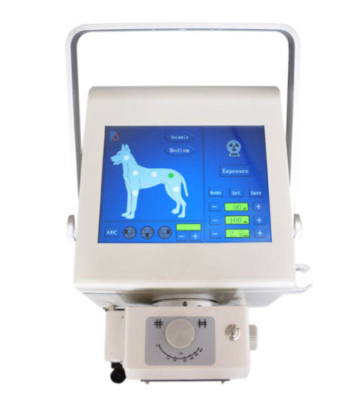
The global veterinary‑imaging‑device market maintains robust growth. According to overseas industry research, the compound annual growth rate (CAGR) of the global veterinary X‑ray‑machine market stays steadily between 5.5% and 7.4%. Mature markets in Europe and North America are dominated by equipment upgrades, while emerging markets across Southeast Asia, Latin America and the Middle East see expansion of new‑build infrastructure. Both trends jointly drive export demand.
Three key factors underpin this market boom:
Surging global pet ownership creates rigid demand for pet healthcareHousehold pet‑ownership rates exceed 60% across North America and Europe. Pets are widely regarded as family members. Radiography for consultations, pre‑operative examinations, orthopedic diagnosis and health‑screening checks have become basic services at pet hospitals. Meanwhile, the expanding middle class in emerging markets fuels pet‑consumption upgrades, and grassroots veterinary clinics are rapidly proliferating, generating massive gaps in imaging‑diagnosis equipment.
Standardization of pet healthcare bans unregulated practice without diagnostic equipmentCountries in Europe, America and Southeast Asia have successively rolled out animal‑welfare and veterinary‑practice regulations. Formal pet hospitals are required to be equipped with X‑ray imaging systems for diagnosing fractures, tumors, internal‑organ lesions and post‑surgical follow‑ups. Clinics without imaging devices cannot deliver compliant veterinary services, directly boosting rigid demand for such equipment.
Chinese‑manufactured products deliver outstanding cost‑performance and are replacing imported alternativesCompared with local Western brands, Chinese‑made veterinary X‑ray machines and DR systems fully meet international standards in performance, stability and digitalization, with prominent price advantages. Suitable for pet‑hospital chains, grassroots clinics and mobile veterinary stations of diverse types, they have become top choices for global purchasers.

Pet hospitals in different regions vary greatly in preferred models, functions and configurations of veterinary X‑ray machines. Accurate differentiation of market features prevents mis‑selection and helps match customer requirements precisely.
North America accounts for nearly 40% of the global market share, with over 35,000 formal veterinary establishments. The digital‑equipment penetration rate for small‑animal hospitals there exceeds 85%. The European market enjoys steady growth with an annual growth rate of 7.4%, dominated by high‑end rigid demand.
Demand features: Full‑digital veterinary DR systems are preferred; analog models are largely rejected. Buyers require high‑definition imaging, AI‑assisted imaging analysis and cloud‑based image transmission to support standardized diagnosis in chain hospitals. Strict compliance with CE, FDA and radiation‑safety standards is mandatory.
Applicable scenarios: Premium pet‑hospital chains, specialized veterinary‑diagnosis centers and pet emergency facilities.
Southeast Asia and Latin America stand out as star markets for veterinary‑medical‑device exports in recent years. Their pet industries are in rapid early‑stage development, with grassroots pet clinics springing up. New‑equipment purchases far outnumber replacement orders.
Demand features: Moderate budgets. Portable, compact desktop and basic digital X‑ray units are favored. Simple operation, minimal debugging requirements and convenient after‑sales maintenance are top priorities; demand for advanced extra functions remains low.
Applicable scenarios: Community pet clinics, small pet retail outlets and township veterinary stations.
Local demand centers on basic medical‑care infrastructure. Equipment must be practical and durable to withstand harsh operating environments. Bulk and project‑based procurement prevails, and cost‑effective models are well‑received.
Many overseas buyers lack professional selection knowledge and only submit vague inquiries for “pet X‑ray machines”. In foreign‑trade communications, use the five core dimensions below to match suitable models quickly and boost deal‑closing rates.
Select according to treated animals: Small‑animal‑specific parameters are essentialThe key difference between veterinary and human‑use X‑ray systems lies in wide size variations among animals (cats, dogs, exotic pets and small mammals). Devices for feline and canine care must feature dedicated low‑dose fine‑tuning parameters, tailored for pets’ delicate skeletons and soft tissues. They deliver sharper imaging with lower radiation exposure, avoiding blurry scans and excessive radiation caused by misapplied human‑use parameters.
Select according to clinic scale: Fixed‑type vs Portable‑type
Large‑scale pet‑hospital chains: Fixed veterinary DR systems are recommended. High‑power units enable fast imaging and continuous radiography to handle heavy daily consultation volumes for high‑frequency clinical use.
Small community clinics: Portable veterinary X‑ray machines are recommended. Compact footprint, simple installation and good cost‑effectiveness satisfy routine radiography needs.
Mobile veterinary services & on‑site visits: Hand‑held portable units. Lightweight and easy to transport, ideal for field visits and stray‑animal rescue missions.
Myth 1: Exporting human‑use X‑ray machines as veterinary equipmentParameters, radiation‑dose settings and imaging logic for human‑use devices are incompatible with veterinary clinical requirements for pet hospitals overseas. Non‑compliant classification may trigger customs clearance failures and acceptance rejections.
Myth 2: Over‑promoting high‑end models in emerging marketsGrassroots clinics in Southeast Asia and Latin America operate on limited budgets. Pushing premium full‑feature DR systems drives up procurement costs and erodes price competitiveness. Cost‑effective basic digital units deliver higher closing chances.
Myth 3: Neglecting qualification and radiation‑safety complianceVeterinary medical devices fall under special regulatory categories. Incomplete certifications or non‑compliant radiation parameters may result in customs seizure, project‑acceptance failures, customer losses and after‑sales disputes.
Compared with the saturated human‑use medical‑device sector, the veterinary X‑ray and DR track offers stable demand, ample incremental opportunities and moderate competition. It serves as a promising new profit‑growth category for medical‑device foreign‑trade enterprises.
By accurately capturing demand across different regional markets, implementing scenario‑oriented product selection for pet hospitals, and securing complete export certifications, companies can rapidly seize blue‑ocean opportunities in the global pet‑medical‑equipment market.
Our company supplies a full portfolio of portable veterinary X‑ray machines and fixed veterinary DR systems, covering all scenarios for high‑end markets in Europe & North America as well as emerging markets in Southeast Asia & Latin America. We hold complete CE and ISO export certifications, support OEM customization, bulk supply and customized project solutions, and provide English‑language documentation plus end‑to‑end foreign‑trade support.
Global medical‑device agents, pet‑healthcare purchasers and overseas chain organizations are welcome to contact us for cooperation, to obtain detailed specification brochures and bulk‑purchase quotations!

Contact: Sophy Gee
Phone: 0086-185-6229-8780
Tel: 0086-0538-8997789
Email: manhua@sdmanhua.com
Add: No. 3699, Shanma Road, Shankou Town, Daiyue District, Tai'an City, Shandong Province
We chat


