


manhua@sdmanhua.com
0086-0538-8997789
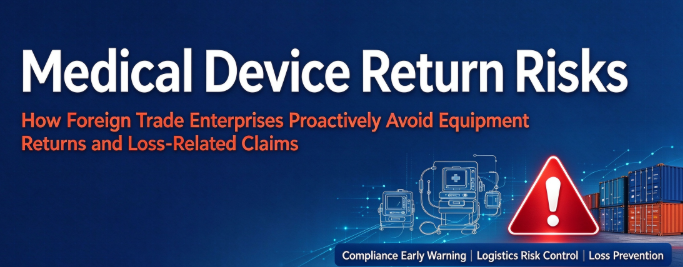
Introduction: Once large‑scale medical devices such as DR systems, ultrasound scanners and patient monitors are returned from overseas, it is far more than a simple goods send‑back. Cumulative losses include round‑trip ocean freight, destination‑port demurrage and warehousing fees, domestic re‑import customs clearance charges, equipment repair and calibration costs, together with customer claims and brand‑reputation damage, as well as risks of export‑tax‑refund recovery. As highly‑regulated products, medical devices incur far higher return costs than ordinary foreign‑trade commodities. This article sorts out frequent root causes of medical‑device returns in foreign‑trade businesses, and shares practical pre‑risk‑control solutions from five dimensions: compliance, contracts, quality control, logistics & after‑sales service, and document management.
Non‑compliance with market‑access requirements (most frequent cause)Mismatch between target‑country registration/certification and delivered product models; nameplates, multi‑language user manuals and warning labels failing to comply with local drug‑regulatory laws and regulations. Goods get detained by customs upon arrival and cannot clear customs, forcing buyers to apply for returns. Many projects fail over trivial details: certified models inconsistent with shipped equipment, outdated label versions. Even demo machines and exhibition machines require local access documentation. Some countries impose strict controls on second‑hand or refurbished medical equipment, which can easily result in cargo rejection.
Ambiguous contract rights and obligations triggering commercial claimsContracts lack clear quality‑assessment criteria, warranty‑scope boundaries and pre‑conditions for product returns. After receiving goods, buyers request full‑unit returns for non‑quality‑related reasons such as unfamiliar operator skills, inadequate on‑site room‑environment conditions, or changed procurement‑demand forecasts. Where contracts fail to specify liable parties for return freight, demurrage and inspection expenses, buyers may file claims directly once disputes arise.
Defective factory quality control and export‑packaging damageMedical devices contain numerous precision electronic components. Long‑distance ocean‑transport vibration, insufficiently reinforced wooden cases, and inadequate moisture‑proof & shock‑proof protection may damage screens, sensors, X‑ray tubes and other core components. Missing factory‑inspection procedures, mismatched equipment parameters, software versions or accessory lists against contract agreements will lead to acceptance failures during on‑site installation and direct cargo rejection by buyers.
Insufficient technical support leading to misjudged faults and subsequent returnsAfter medical devices arrive overseas, inadequate installation training and remote technical support are provided. Local client engineers misjudge operational‑procedure errors as equipment malfunctions. Clients at grassroots‑level projects often lack operation‑and‑maintenance capabilities. Unable to resolve minor faults remotely, they choose to return complete units to guarantee hospital‑project progress.
Incomplete documents and traceability recordsLack of complete original factory test reports, serial‑number ledgers and export‑certification documents. When returns occur, enterprises cannot submit full sets of original documents to domestic customs for return‑declaration purposes. Goods are detained at ports for long periods, generating steep ongoing demurrage charges.
Prior to contract signing, verify regulatory requirements for target markets. Confirm that registration certificates such as CE, FDA and ANVISA cover the exact product models for shipment. Check that nameplates, manual languages and warning labels satisfy local drug‑regulatory requirements. Archive all certificate versions and label‑related files, and establish one‑file‑per‑unit archives with serial‑number records.
Meanwhile, clarify during business communications: the import‑on‑record (IOR) importer shall bear primary responsibility for import customs clearance. Buyers shall confirm local import permits in advance. Customs‑clearance failures caused by buyers’ insufficient qualifications or local‑policy changes shall not constitute the seller’s product‑quality liability.
Contracts serve as the most critical tool for loss prevention. For medical‑device foreign‑trade contracts, focus on perfecting the following clauses:
Quality‑assessment criteria: Specify that quality judgment shall be based on factory third‑party test reports and contract‑agreed technical parameters. Distinguish between hardware‑quality defects, on‑site environmental issues and operational‑misuse problems.
Warranty‑scope definition: State clearly that warranty only covers manufacturing defects of the equipment itself. Damages caused by inadequate power supply at client premises, human operational errors and improper installation shall be excluded from warranty coverage.
Pre‑conditions for returns: Agree that complete‑unit returns shall not be permitted without prior written confirmation from both parties. In case of disputes, prioritize remote troubleshooting, on‑site maintenance and component replacement; full‑unit return shall be regarded as the last resort.
Cost allocation: Specify that for returns arising from non‑seller‑quality causes, all ocean‑freight fees, port demurrage charges, warehousing fees and insurance premiums shall be borne by the buyer.
Dispute resolution: Designate inspection institutions, set claim‑filing time limits and define burden‑of‑proof requirements for claims to prevent arbitrary high‑value claims from buyers.
Multi‑stage factory inspection: Complete power‑on testing, continuous aging tests and imaging / performance‑indicator verification for each complete unit. Issue an independent factory test report for every device. Keep photographic records of equipment appearances, serial numbers and accessory‑packing records.
Professional export packaging: Apply fumigated solid‑wood export crates with inner moisture‑proof films and shock‑absorbing buffers. Provide separate protective packaging for high‑value components such as X‑ray tubes and flat‑panel detectors. Clearly mark lifting directions and fragile‑item labels.
Pre‑shipment inspection (PSI): Invite clients or third‑party institutions to conduct on‑site inspection before shipment. Obtain signed confirmation from both parties to reduce post‑delivery quality disputes.
Logistics solutions: Appoint freight forwarders with rich experience in transporting large‑scale medical devices. Purchase adequate cargo insurance. Track cargo arrival milestones and remind buyers in advance to prepare documents for customs clearance and goods pickup.
Standardized technical support: Provide multi‑language operation manuals and instructional videos, and open remote‑technical‑support channels. For large‑scale grassroots‑level projects, deliver on‑site installation training and basic operation‑and‑maintenance courses.
Tiered fault‑handling mechanism: Follow the priority workflow: remote troubleshooting → on‑site engineer maintenance → component replacement. Prioritize partial‑repair solutions to avoid full‑unit returns.
Classify and archive full‑set documents: contracts, proforma invoices (PI), packing lists, bills of lading, factory test reports, copies of certification documents, equipment serial‑number ledgers, shipping photos and videos. In case of returns, submit original documents promptly to domestic customs to satisfy return‑declaration formalities and lower risks of export‑tax‑refund recovery.
When Chinese medical‑device enterprises expand globally, many focus heavily on order acquisition and certification work while overlooking return risks. Once full‑unit equipment is sent back, losses extend far beyond product value, including high logistics & demurrage expenses and brand‑reputation erosion.
Carry out compliance pre‑assessment, adopt rigorous contract clauses, implement complete factory inspections, deliver adequate technical‑after‑sales support and build comprehensive equipment‑record archives. Integrate risk‑control into early‑stage business negotiations — this is the core approach to prevent returns and mitigate claim losses.
We specialize in export‑oriented medical‑device businesses covering DR systems, mobile ultrasound scanners, patient monitors and other equipment, with complete international market‑access qualifications. We can assist overseas agents and government‑project clients with project‑compliance evaluation, and provide matched equipment‑technical‑training and after‑sales‑service solutions. Global partners are welcome for business inquiries.

Contact: Sophy Gee
Phone: 0086-185-6229-8780
Tel: 0086-0538-8997789
Email: manhua@sdmanhua.com
Add: No. 3699, Shanma Road, Shankou Town, Daiyue District, Tai'an City, Shandong Province
We chat


